Letter and number tracing practice lists
Plan tracing pages with letter, number, and short-word lists for early writers. Text only: print the list on your tracing paper or set it in a tracing font.
Free · No account · Up to 40 items · Answer key included
Tip: Describe the specific skill or topic. The generator calibrates complexity to the grade level you pick.
GradeWithAI is used by 21,000+ teachers, including teachers at
What is a tracing worksheet?
A tracing worksheet shows letters, numbers, shapes, or words in dotted or light lines for a young child to trace with a pencil, building the control needed to write independently. This generator doesn't draw tracing lines; it writes the content list as plain text with writing lines.
The developmental progression tracing supports
Pre-writing strokes tend to develop in a predictable order, and letters combine them: a capital A needs two diagonals and a horizontal. Skipping straight to letters is one reason some kindergartners struggle.
Vertical lines: around age 2 to 3
Horizontal lines and circles: around age 3
Crosses: around age 4
Squares and diagonal lines: around age 4 to 5
Triangles: around age 5
What the generator can and can't make for tracing
It writes lists: target letters in uppercase, lowercase, or both; numerals 0–20; CVC and sight words; and theme words (ocean animals, fall leaves). It cannot draw pre-writing strokes, shapes, dotted letters, or arrows. For those, use tracing paper, a tracing font, or a dry-erase sleeve over a model you draw.
Layering tracing into preschool and kindergarten routines
A typical pre-K or kindergarten week might rotate shapes, numbers, letters, names, and a free-choice page. Use the generator to change the letter, number, and word lists each week, since the same page repeated many times invites tracing on autopilot. Short CVC words (cat, dog, sit) connect letter practice to reading.
How the worksheet generator works
- 1
Describe the worksheet
Name the skill, the format, and any context, such as 2-digit multiplication word problems about sports.
- 2
Set the details
Grade, difficulty, and number of items. It usually takes 10 to 20 seconds.
- 3
Print
Print with or without the answer key, or copy the items into your own document.
What teachers say
Teachers across subjects, from AP history to astrophysics, on grading with GradeWithAI.
“I've really enjoyed using the GradeWithAI program. It saves me a ton of time, especially when I have class sizes of 35 or 36 students times five.”

“GradeWithAI doesn't just grade. It gives the student reasoning as to why every point is awarded or not awarded. That is a very valuable thing for the students.”

“More impressive though is that it corrects student answers not simply using a pre-written answer, but by following the thought process they've pursued.”

“For Chadwick users, GradeWithAI has improved feedback efficiency and effectiveness, as it is grounded in existing platforms and is highly adaptable.”

“GradeWithAI [provides] students with timely individualized feedback on their homework assignments and formative assessments. This is a job that is virtually impossible for a teacher to do on a regular basis.”

“Students have also appreciated the consistency and immediacy of the feedback I can provide through GradeWithAI. This has enabled them to make necessary corrections and achieve their desired scores on any assignment.”

Grading the completed worksheets?
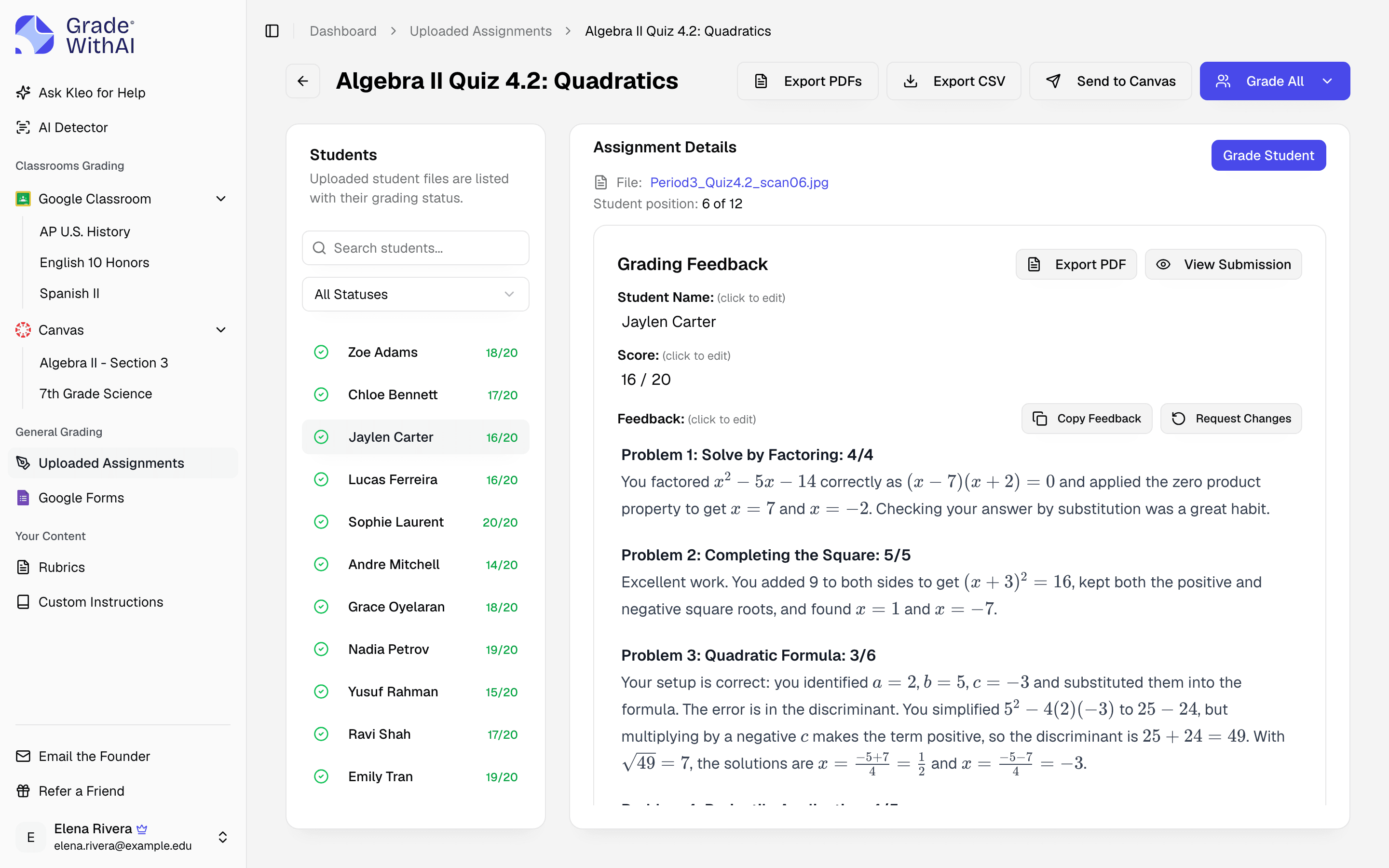
Scan or photograph the completed worksheets and upload them to GradeWithAI with your answer key. It reads handwriting, grades each item, and you review every score before it posts.
Students working on paper? See how GradeWithAI grades handwritten work
No. The worksheet PDF is plain text in a standard font with two writing lines under each item. Use the generated lists with tracing paper or a tracing font, or as copy practice.
Ages 3 through 6 for building the skill, and occasionally into grades 1 and 2 for students with fine-motor delays or those receiving occupational therapy. Most students past that age have the control to practice letters freehand.
For the content, yes. Ask for theme words (pumpkins, snowflakes, spring flowers) and the generator writes the list. It can't draw theme shapes or outlines, so add any pictures yourself.
Any text-based format you describe: fill in the blank, matching, short answer, word problems, vocabulary in context, and math practice. It doesn't draw tracing lines, cursive letters, or pictures.
Yes. Print or save a PDF with the title, instructions, and numbered items with answer lines, or copy the text into your own document.
Yes. Every item has an answer. Leave the key on to print it on a separate page, or turn it off for a student-only copy.
Yes. Pick kindergarten through 12th grade and easy, medium, or hard.
From 1 to 40. The default is 12.
Yes, with no account.
Worksheet generators by grade and skill
Starting points with the grade and skill filled in.
By type
By subject
Grade the completed worksheets
21,000+ teachers use GradeWithAI to grade essays, tests, and handwritten work, and report saving 10+ hours a week.
The free plan grades 25 submissions every 30 days. No credit card.
Reported by teachers using GradeWithAI, with feedback on every submission they grade.